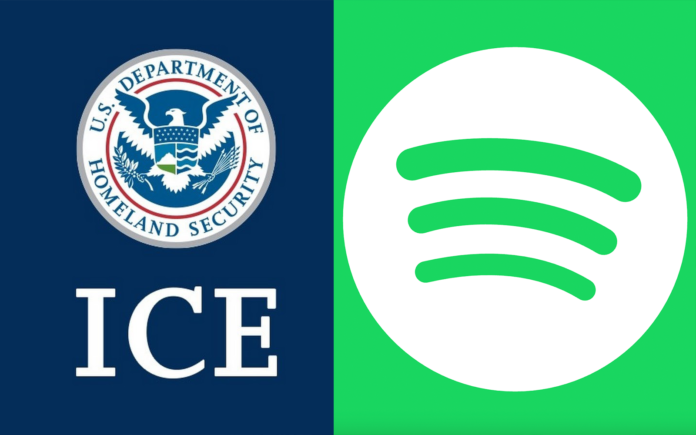

Spotify has confirmed that recruitment advertisements for U.S. Immigration and Customs Enforcement (ICE) are no longer running on its platform. However, despite renewed scrutiny following the horrific murder of Nicole Renee Good by an ICE officer in Minneapolis, the streaming giant has not indicated any change in its stance regarding future government ad campaigns.
A Spotify spokesperson confirmed to Variety that the ads ended late in 2025, stressing that their disappearance was not related to the fatal shooting of Good by an ICE agent earlier this week: “There are currently no ICE ads running on Spotify. The advertisements mentioned were part of a U.S. government recruitment campaign that ran across all major media and platforms.”
The campaign in question was part of the Trump administration’s $30 billion initiative to hire at least 10,000 new deportation officers by the end of 2025. Recruitment ads appeared across numerous platforms, including Hulu, Max, YouTube, Pandora, Amazon, and Spotify.
Though perhaps more disappointing is a (possibly different) Spotify spokesperson’s comments to Paste magazine, saying: “I can’t speculate on hypothetical future campaigns but, as is the case with all major platforms, any future ads need to adhere to the company’s policies.” So this isn’t really Spotify pulling the ICE ads – they just ended, and they could come back if Spotify is willing to take the money. Capitalism!
In November, Rolling Stone reported that Spotify had received $74,000 from the Department of Homeland Security to run ICE recruitment ads. By comparison, Google and YouTube were reportedly paid $3 million for Spanish-language advertising encouraging self-deportation, according to Equis data.
Spotify’s ICE ads were played between songs for users on the platform’s free, ad-supported tier and promoted $50,000 signing bonuses for new recruits. The ads sparked widespread criticism from listeners, artists, and advocacy groups. Which isn’t surprising either considering ICE is out there killing folks and then lying about it.
At the time, Spotify defended its decision, stating: “This advertisement is part of a broad campaign the U.S. government is running across television, streaming, and online channels. The content does not violate our advertising policies.”
Enter your information below to get a daily update with all of our headlines and receive The Orchard Metal newsletter.