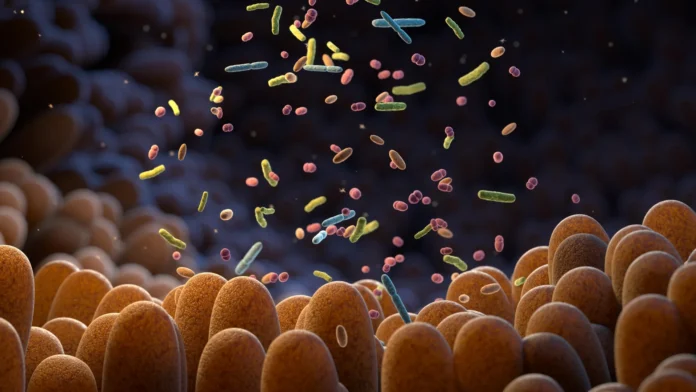

A large laboratory investigation of human-made chemicals has revealed 168 substances that are harmful to bacteria normally found in a healthy human gut. These chemicals interfere with the growth of microbes considered essential for maintaining good health.
Many of the substances identified in the study are expected to enter the body through food, drinking water, or general environmental exposure, yet most were not previously believed to influence bacteria in any way.
As gut bacteria adapt to chemical pollutants, some appear to develop resistance to antibiotics such as ciprofloxacin. If the same process occurs inside the human gut, it could make certain infections more difficult to treat.
Testing Shows Common Pollutants Can Harm Beneficial Microbes
The research team, led by the University of Cambridge, examined how 1076 chemical contaminants affected 22 species of gut bacteria under laboratory conditions.
The substances found to disrupt microbial growth include pesticides such as herbicides and insecticides used on crops, as well as industrial chemicals present in flame retardants and plastics.
The gut microbiome contains an estimated 4,500 different types of bacteria that work together to support bodily functions. When this system becomes imbalanced, it can contribute to a wide range of health problems involving digestion, weight regulation, the immune system, and mental health.
Standard safety evaluations for chemicals do not account for effects on the gut microbiome because most chemicals are created to act on specific targets. For instance, insecticides are meant to affect insects, not humans or their resident microbes.
New Machine Learning Tool Predicts Chemical Risks to Gut Health
Using the data gathered in the study, the researchers developed a machine learning model to forecast whether industrial chemicals — whether already in circulation or still being designed — are likely to harm human gut bacteria.
Details of the study, along with the machine learning tool, appear in the journal Nature Microbiology.
Dr. Indra Roux of the University of Cambridge’s MRC Toxicology Unit and first author of the study said: “We’ve found that many chemicals designed to act only on one type of target, say insects or fungi, also affect gut bacteria. We were surprised that some of these chemicals had such strong effects. For example, many industrial chemicals like flame retardants and plasticizers — that we are regularly in contact with — weren’t thought to affect living organisms at all, but they do.”
Professor Kiran Patil, senior author and member of the same research unit, said: “The real power of this large-scale study is that we now have the data to predict the effects of new chemicals, with the aim of moving to a future where new chemicals are safe by design.”
Dr. Stephan Kamrad, also part of the research team, added: “Safety assessments of new chemicals for human use must ensure they are also safe for our gut bacteria, which could be exposed to the chemicals through our food and water.”
Need for Real-World Chemical Exposure Data
There is still limited knowledge about how environmental chemicals directly influence the gut microbiome and human health. The team notes that our gut bacteria are likely coming into contact with many of the substances tested in the study, but the actual amounts reaching the gut are not yet known. Future research that tracks total chemical exposure across the body will be needed to determine the true level of risk.
Patil said: “Now we’ve started discovering these interactions in a laboratory setting it’s important to start collecting more real-world chemical exposure data, to see if there are similar effects in our bodies.”
In the meantime, the researchers recommend practical steps to reduce exposure to chemical pollutants, such as washing fruit and vegetables thoroughly before eating and avoiding the use of pesticides in home gardens.