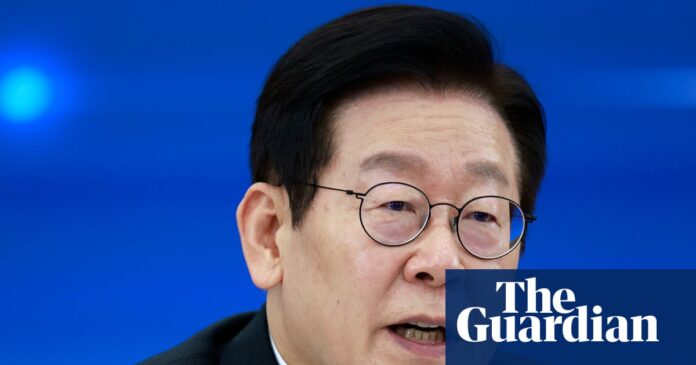

South Korean president Lee Jae Myung has instructed his government to consider extending public health insurance to cover hair-loss treatments, arguing that baldness has become a “matter of survival” rather than a cosmetic concern for young people.
The proposal, which has since faced a backlash from medical professionals and conservative figures, was announced during a policy briefing on Tuesday and would expand coverage beyond the limited medical treatments currently available for certain types of hair loss.
South Korea operates a universal insurance scheme funded by premiums that are calculated based on income. Currently, the scheme covers only hair loss caused by medical reasons, such as alopecia areata. Most treatments for common male pattern baldness remain excluded from coverage.
“There may be young people who think it’s unfair that they only pay insurance premiums and can’t receive benefits,” Lee said, noting that the “sense of alienation” among them had become severe.
The president first proposed the policy as a candidate during his unsuccessful 2022 presidential election campaign, when it drew criticism as populist pandering, but dropped it from his most recent election platform.
The proposal has highlighted South Korea’s intense cultural focus on physical appearance. A 2024 survey of young adults found that 98% of respondents believe attractive people receive social benefits.
The cultural pressure is particularly demanding and acute for women, who face strict expectations about makeup, skincare and body shape.
For men, the issue is less openly discussed, but some with a receding hairline opt to grow out their fringes to disguise hair loss, or seek expensive treatments.
South Korea’s hair-loss treatment market was thought to be worth around 188bn won (£95m) in 2024, and industry groups claim that of a population of more than 51 million, around 10 million experience hair loss, though this figure has never been officially verified.
Hair-loss shampoos are particularly popular, though in recent years some products have faced criticism over their claims of effectiveness.
The timing of Lee’s proposal is particularly sensitive because South Korea’s health insurance system faces mounting financial pressure. Recent internal projections suggest the system could reportedly face deficits as large as 4.1tn won (£2.1bn) in 2026.
Medical professionals have reacted with scepticism to the idea.
The influential Korean Medical Association said that “rather than investing health insurance finances in hair loss treatment coverage, prioritising coverage for cancer and other serious diseases would better align with health insurance principles.”
Conservative newspapers have been particularly critical. The Chosun Ilbo argued in its editorial that “this is not something the president should suddenly instruct without collecting opinions from citizens who pay insurance premiums.”
Health minister Jeong Eun Kyeong expressed caution about the proposal, interpreting Lee’s “survival” claim as referring to young people’s confidence during job searches and the impact on mental health.
When asked on a radio show whether extending coverage would substantially affect health insurance finances, Jeong replied: “I think so,” and noted that expanded coverage would require a comprehensive analysis.
Former conservative lawmaker Yoon Hee-sook, who has a relative undergoing cancer treatment, wrote on Facebook that while she sympathises with young people’s hair-loss stress, “prioritising treatments directly connected to life and bodily function represents the current social consensus.”
Park Joo-min, a ruling party MP who has publicly discussed his hair transplant procedure and is known for his advocacy on hair-loss issues, posted “truly Korea!” on X in an apparent endorsement.