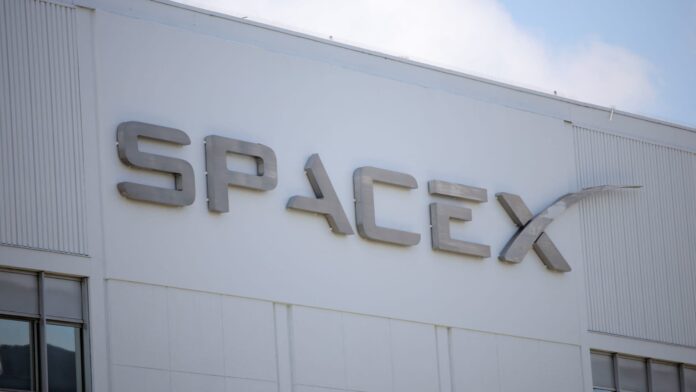

SpaceX headquarters is shown in Hawthorne, California, U.S. June 5, 2025.
Daniel Cole | Reuters
Elon Musk’s Starlink is offering free broadband internet service to users in Venezuela through Feb. 3, following U.S. airstrikes and the capture of ousted leader Nicolás Maduro.
The satellite internet provider said in a release on Sunday that service credits were being added proactively to both active and inactive accounts as it monitored evolving conditions and regulatory requirements.
“While we do [not yet have] a timeline for local purchase availability, if and when there are updates they will be communicated directly through official Starlink channels,” it added.
Starlink, which is a subsidiary of aerospace company SpaceX, provides internet access through low-earth-orbit satellites and requires users to purchase separate equipment to connect to the service.
Starlink’s availability map on its website lists Venezuela as “coming soon,” suggesting the company had not formally launched service there, despite indicating that some users were already active. It remains unclear how the company’s services and pricing would evolve after Feb. 3.
Nonetheless, a temporary ramp-up of free internet services in the country could help provide connectivity amid the fallout of recent U.S. airstrikes and a ground raid to capture and extradite Maduro for trial on allegations including narco-terrorism and election rigging.
It is highly likely that Starlink will become available, for free, everywhere where the U.S. is involved in an antagonistic relationship with the regime.
Marko Papic
Global GeoMacro Strategist at BCA Research
Washington’s operations on Jan. 3 mostly targeted areas in the Venezuelan capital of Caracas, with the states of Miranda, Aragua and La Guaira also attacked, according to a government statement.
Following the airstrikes, reports indicated that areas of Caracas had lost power and internet connectivity. Some local outlets also reported outages in Miranda over the weekend.
U.S. President Donald Trump has stated that the U.S. would oversee Venezuela’s transition, though details remain unclear amid concerns over a power vacuum.
The president also announced Saturday that Vice President Delcy Rodriguez was sworn in after Maduro’s arrest, but has threatened a second strike on Venezuela if the leadership didn’t “behave.”
Meanwhile, the U.N. Security Council plans to hold a meeting on Jan. 6 to discuss the legality of U.S. action, as countries, including U.S. allies such as Brazil and Spain, have condemned the military actions.
Starlink’s growing global influence
Venezuela is not the first conflict zone where Starlink has been deployed. The satellite service was rolled out in Ukraine in 2022 to replace internet and communication networks damaged by Russia’s invasion of the country, quickly becoming a critical tool for both civilian and military connectivity.
While Ukrainian and international officials praised Starlink’s role in the war-torn country, its use in the conflict also raised questions about the influence a single private company could wield over access to internet services during wartime.
These concerns escalated in September 2023 when a biography on Musk revealed that he had previously denied a Ukrainian request to activate Starlink coverage over Russian-annexed Crimea, effectively thwarting a planned drone submarine attack.
This disclosure prompted the U.S. Senate Armed Services Committee to probe “serious national liability issues” stemming from a private citizen’s sway over the conflict.
However, in June 2023, the U.S. Department of Defense brought Starlink’s activities in Ukraine under its formal oversight through a contract with SpaceX, effectively making the company an official military contractor.
The Department of Defense did not immediately respond to a CNBC request for comment regarding potential involvement or oversight of Starlink’s operations in Venezuela.
Beyond conflict zones, Starlink has also been used to bypass government-imposed internet censorship and shutdowns in several countries.
In Iran, thousands of users have reportedly used Starlink to access the unfiltered internet, defying government restrictions despite the service not being officially approved.
Venezuela also has a well-documented history of internet censorship and shutdowns, especially during times of political upheaval under the governments of Hugo Chávez and Maduro.
“Starlink allows internet to be provided by non-state companies in authoritarian regimes,” Marko Papic, Global GeoMacro Strategist at BCA Research, told CNBC, adding that this is almost certain to become a trend.
“It is highly likely that Starlink will become available, for free, everywhere where the U.S. is involved in an antagonistic relationship with the regime,” he said.
Starlink did not disclose how many users it had in Venezuela as of Sunday, nor the costs it might incur to provide the service.