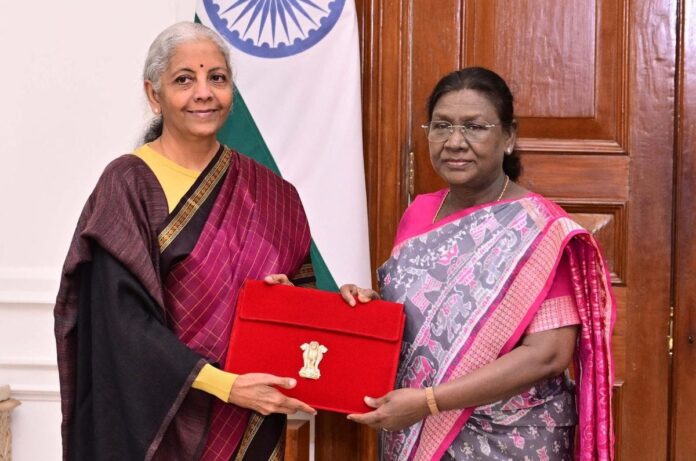

Given the GST reforms in September last year, which reduced taxes across nearly all passenger vehicle sectors, there were few direct auto manufacturing and sales-specific announcements at the 2026-27 budget. However, the budget proposed by Union Finance Minister Nirmala Sitharaman had benefits which would help the Indian automobile industry.
- EV costs likely to ease via battery and mineral duty exemptions.
- CNG prices could slightly reduce with excise relief on biogas blends.
- Auto supply chains are likely to strengthen via MSME and logistics funding.
Duty exemption on lithium-ion cell manufacturing
Duty exemption to lower EV battery costs and boost local manufacturing
The government’s decision to extend duty exemption on capital goods used for lithium-ion cell manufacturing will lower the cost of making batteries in India. This helps battery makers set up and expand local factories instead of importing cells. Over time, this can reduce the cost of electric cars, two-wheelers, and buses, improve battery availability, and lower dependence on imports. For customers, this means more affordable EVs, better service support and potentially longer battery warranties as local manufacturing scales up.
Lower duties for EV minerals
Capital goods duty exemption to support domestic critical mineral processing for EVs
The Budget has announced a customs duty exemption on capital goods used for processing critical minerals such as lithium, cobalt and rare earth elements, which are essential for EV batteries and motors. This measure is expected to lower the cost of setting up and expanding mineral processing facilities in India, encouraging domestic value addition and reducing reliance on imported processed materials. For the automobile sector, especially EV manufacturers, this can lead to more stable input supplies and lower exposure to global price volatility. Over time, the move is expected to support cost efficiency, supply chain resilience and long-term affordability of electric vehicles for customers.
Full excise relief on biogas-blended CNG
Full excise exemption on biogas-blended CNG is likely to lower fuel costs
The government also announced full excise duty exemption on the biogas portion of biogas-blended CNG, excluding its entire value from excise calculations. Earlier, only GST paid on biogas was adjusted, leaving a residual tax burden, but the new move removes excise duty completely on the green component. With an excise duty on CNG of around 14 per cent, or approximately Rs 14-15 per kg, the change could lower the per-kg retail CNG prices by a few rupees.
Semiconductor mission 2.0
ISM 2.0 and expanded electronics manufacturing support to strengthen auto semiconductor supply chains
Given the importance semiconductors play in automobiles today, the India Semiconductor Mission (ISM) 2.0 announcement would help the sector. The Mission looks to move beyond solely chip manufacturing and into equipment, materials, and intellectual property. ISM 2.0 will now expand to include locally produced semiconductor equipment and materials, the development of full-stack Indian chip IP, and the strengthening of supply chains.
Sitharaman said the Electronics Components Manufacturing Scheme, launched in April 2025 with an outlay of Rs. 22,919 crore, has already attracted investment commitments exceeding twice the target. Thus, the proposal is to now increase the scheme’s allocation to Rs. 40,000 crore.
Stronger support for auto MSMEs
Rs 10,000 crore SME Growth Fund to support auto and component MSMEs
Small and mid-sized enterprises (MSMEs) that supply parts to car, bike and EV manufacturers (OEMs) are set to benefit from improved access to funding and faster liquidity following the Budget announcements. The government has proposed a Rs 10,000 crore SME Growth Fund to provide long-term capital to scalable auto and auto-component MSMEs, enabling capacity expansion, machinery upgrades and quality improvements.
Liquidity support has been strengthened through the Trade Receivables Discounting System (TReDS), with over Rs 7 lakh crore already facilitated, helping MSMEs manage extended payment cycles from OEMs. In addition, the rollout of Corporate Mitras in Tier-II and Tier-III cities has been announced to ease compliance related to taxation, certifications and regulatory requirements, allowing MSMEs to focus on growth, localisation and competitiveness.
Rare earth corridors to be constructed
Rare earth corridors to secure EV battery supply chains and reduce import dependence
With the rising importance of battery production for EVs, the government today announced the intention to create rare earth corridors in four states: Odisha, Kerala, Andhra Pradesh, and Tamil Nadu, to secure critical minerals needed in the building of EV batteries. The recent curbs on rare earth materials from China affected supplies and disrupted local electric vehicle production. Thus, the plan is for these corridors to span the full value chain, from mining and processing to research and manufacturing.
Sitharaman said, “The Centre will work with mineral-rich states to develop cluster-based, plug-and-play ecosystems, making it easier for private players to invest in rare earth processing and downstream manufacturing.” The announcement follows the government’s rare earth permanent magnet scheme, launched in November 2025.
New Dedicated Freight Corridor
New freight corridor and waterways push to cut logistics costs for industry
The government will also develop a new dedicated freight corridor between Dankuni in eastern India and Surat in the west. The proposed corridor targets a shift in freight to more sustainable transport modes, to ease pressure on congested road and rail networks and lower logistics costs for the industry. Sitharaman said the corridor would complement ongoing investments in rail, inland waterways, and coastal shipping.
The government will also operationalise 20 new national waterways over the next five years, starting with National Waterway-5 in Odisha, which when operational, will link mineral-rich areas such as Talcher and Angul with industrial hubs including Kalinganagar and ports such as Paradeep and Ghamra. The budget proposes a coastal cargo promotion scheme to increase the share of freight shipping via inland waterways and coastal routes from 6 percent to 12 percent by 2047.