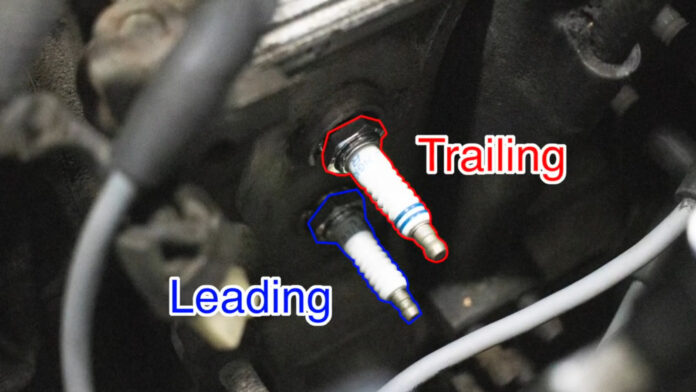

Perfectly tuning the heat range of an engine’s spark plugs is something of a dark art to all but the most well versed tuners and the engineering egg heads at automotive OEMs. Getting the spark plug tuning right in a rotary-engine application, however, is a whole other level of nerdy. Though it’s probably a bit redundant to say so, because rotary engines—and the enthusiasts who love them—are inherently nerdy. They give off the same vibe as people who insist on using a Linux operating system in big 2026. Forever chided by piston pumpers that their cars are powered by so-called magic spinning Doritos, the rotor-head must remain steadfast in their dedication to Felix Wankel’s fantastic-but-often-misunderstood engine layout. The first thing you need to know about rotary engines is that they hate running in a lean burn mode, so avoid that at all costs. The second thing you must know is how to properly set up each rotor’s leading and trailing spark plugs.
In order to understand the value of the correct spark plugs in a rotary engine, you first must understand a bit of how a rotary engine operates in the first place. A Reuleaux triangle-shaped “rotor” spins around an eccentric shaft within the inner envelope of a 2-lobe Peritrochoid housing. Each of the three corners of the rotor slide against the surface of its housing, creating three continual intake, compression, combustion, and exhaust phases at all times. It’s as clear as mud, I know.
What is the job of a leading plug?
The leading plug is significantly more important to the running condition of a rotary engine, so getting it right is paramount. In fact, these unique motors can run perfectly fine without a trailing plug at all. As the air and fuel is pulled in, the rotor squeezes that air toward the leading spark plug and right as it passes, ignites. By the time the trailing spark plug fires off, the rotor is already pushing to the point of its full compression, ushering the explosion toward its exhaust port exit stage right. Because the combustion cycle of a rotary engine is so quick, and these engines typically run much higher RPM than a piston engine, the second plug is instrumental in cleaning up the burn and ensuring that anything not ignited by the leading plug is given a chance to do its part in creating forward motion.
To put all this more simply, the leading plug ignites about 95% of the air/fuel mixture, with the trailing plug firing about 10 degrees later in the rotor’s arc, getting the remaining 5% of unspent hydrocarbons, well, spent. There isn’t a hard and fast rule to it, but some Mazda nuts claim around three to five percent of a rotary engine’s power comes from the addition of a trailing plug. Trailing plugs are so important for eking out those last few horsepower that the company added a third spark plug, a “late trailing plug” to the R26B engine in its famed 787B Le Mans-winning prototype race car.
What sets the two plugs apart?
The leading plug in a rotary application is typically throwing a “hotter” spark than its paired trailing plug. For one thing, the engine needs a hotter initial spark to ignite that large mass of fuel and air in a less dense and less compressed part of the cycle. Making this plug hotter means the engine is easier to start when it is cold, and runs better in mild steady-state driving. The trailing plug, meanwhile, is typically specified by the manufacturer (or engine builder) to be a couple of steps colder, to avoid creating hot spots in an already-on-fire secondary combustion stage.
Do you understand how it works yet? No? Okay, well just watch this video of Mad Mike’s ridiculous “Mad Mac” rotary-powered McLaren, and it kind of won’t matter anymore. Just listen to that ripper sing.