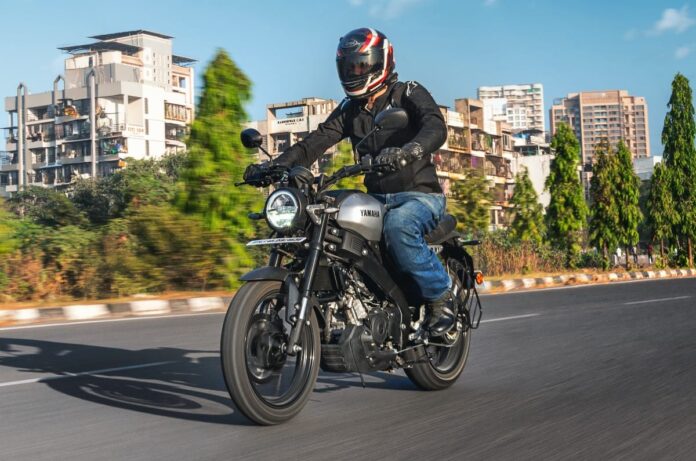

Despite being on sale overseas since 2019, Yamaha has only just launched its neo retro roadster the XSR 155 in India. Based on the same platform that underpins the R15 and MT-15, this bike offers a more comfortable and less polarising addition to that family.
Yamaha XSR155 Design and quality – 8/10
Elegant design with nice attention to detail
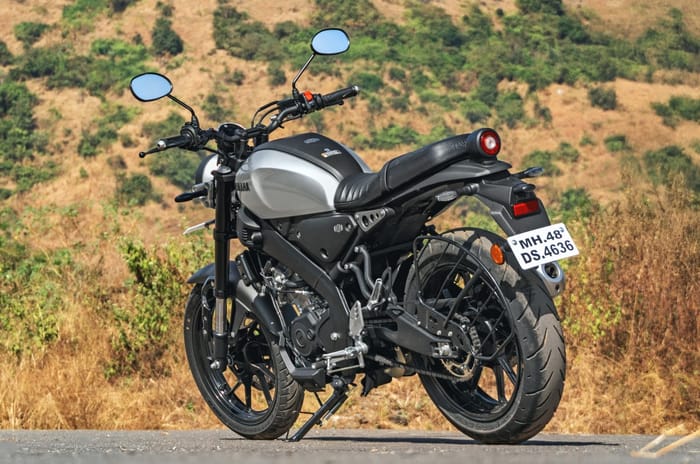
One of the many reasons that enthusiasts in India have been asking for this bike over the years is the way it looks. The XSR manages to effortlessly carry a handsome and cohesive neo-retro design in a way the made-for-India FZ-X never could.
The XSR has a handsome, porportionate design and is well-finished.
It has all the essentials including a round headlamp, single pod instrument console, a stylish fuel tank and a clean subframe design. The solo brake lamp completes the look and there are plenty of small touches that add to the classy effect. These include 3d logos on the fuel tank, metal garnishes on the subframe under the seat and very premium looking aluminium headlamp holders.
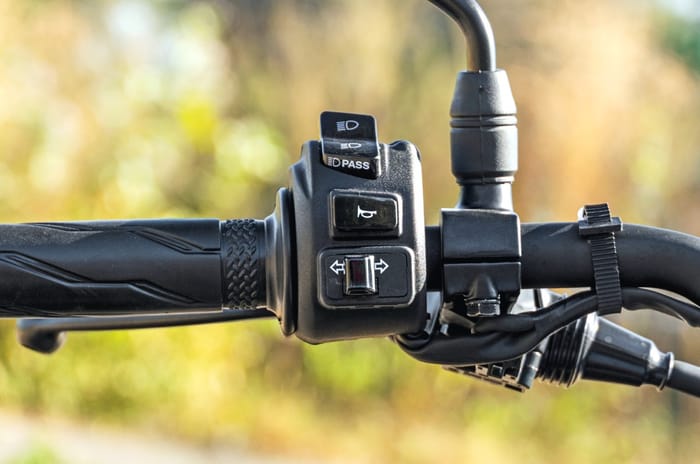
Inverted horn and indicator buttons are a needless complication on an otherwise straightforward bike.
Quality and finish levels all over at a good level for this price point and the sole area of complaint is in the switchgear. It not only looks quite budget, but it also has an unergonomic rocker style button for the high beam flash switch. The horn and indicator placements have also been interchanged like on some Honda bikes, which is another irritant.
Yamaha XSR155 seating position and comfort – 8/10
A conventional riding position, but with some sportiness
The existing bikes in Yamaha’s line up have either very aggressive seating positions (R15) or are upright, but cramped (MT-15). The XSR offers a much more roomy riding position that will accommodate tall riders well. Despite the old school design theme, the footpegs are fairly rearset and there is a noticeable lean down to the wide handlebar. It’s not uncomfortable by any means, but it is a rather sporty and connected riding position.
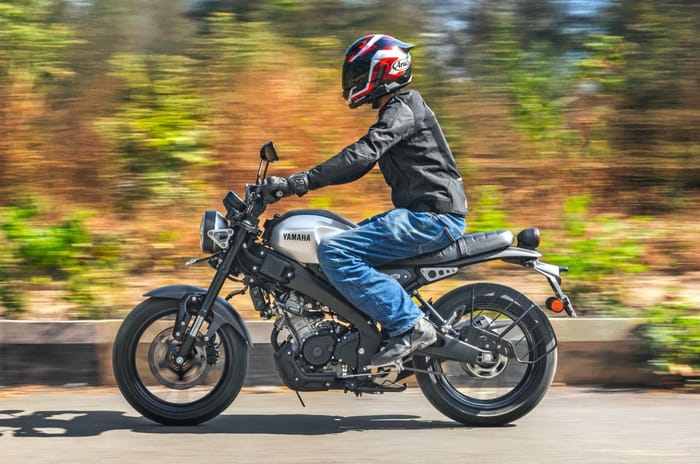
Despite its retro looks, the XSR has a rather sporty riding position – without being too extreme.
At 810mm, the seat is a little taller than on most premium/sporty 150-160cc bikes in the market. However, weighing just 137kg, the XSR is lighter than almost all of them and that will help ensure that most riders find this bike easy to manage at low speeds.
| Weight and dimensions | |
|---|---|
| Kerb weight | 137kg |
| Seat height | 810mm |
| Ground clearance | 170mm |
| Fuel tank capacity | 10 litres |
| Wheelbase | 1325mm |
The pillion seat is reasonably spacious and should be more comfortable than the R15 or MT-15, but there is little for the pillion to hold onto apart from a thin strap across the seat. We understand that Yamaha is developing an accessory grab handle, and this might prove to be a popular option for those who ride with a pillion.
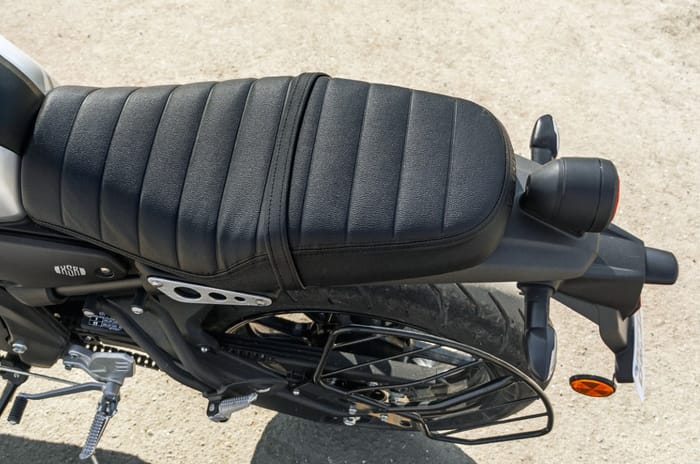
Pillion doesn’t have much to hold onto aside from the seat strap.
Finally, the ground clearance is the same as the MT-15 at 170mm, which is generous enough for life on Indian roads.
Yamaha XSR155 suspension comfort and handling – 8/10
The XSR’s suspension comfort mirrors its riding position.
The XSR uses the same steel perimeter chassis and aluminium swingarm as its 155cc siblings and its setup is very similar to the MT-15. As a result, the suspension has a decent level of suppleness, but it can feel firm when ridden over bad patches, especially at higher speeds. Combine that with the forward lean to the bars and you can end up with a sore lower back if you have to deal with longer stretches of bumpy roads.
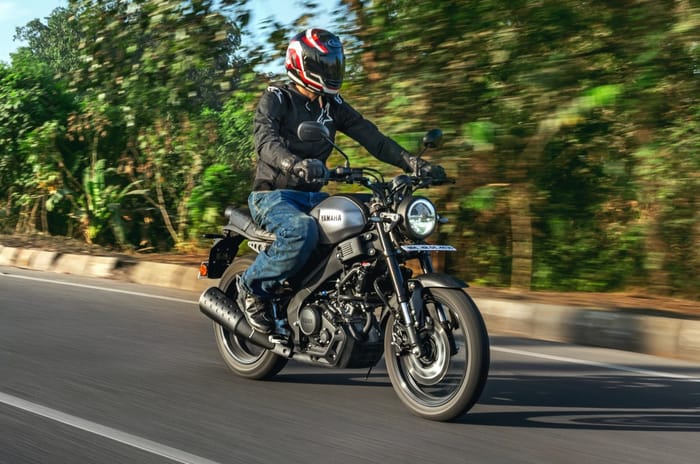
The XSR may look retro but its modern suspension setup is on the firmer side.
Of course, given the XSR’s sporty underpinnings, the overall suspension set up is acceptable, but since this is a retro looking bike, it’s important to point out that it doesn’t ride like one. Yamaha also seems to want to make this clear by referring to the XSR as a ‘retro sport’ on its website.
| Suspension, tyres and brakes | |
|---|---|
| Suspension (F/R) | USD fork / Monoshock |
| Brakes (F/R) | 282mm disc / 220mm disc |
| Tyres (F/R) | 100/80-17 / 140/70-R17 |
As you would expect, the handling is a joy and the XSR feels beautifully light and nimble, but also reassuringly stable when you hit some unexpected bumps at speed. The bike changes direction with very little effort, but it also has a perfectly neutral balance that never takes you by surprise. There’s plenty of fun to be had on a winding road and that delightfully light feel is something that rewards everywhere – be it in dense city traffic or on a fast winding road.
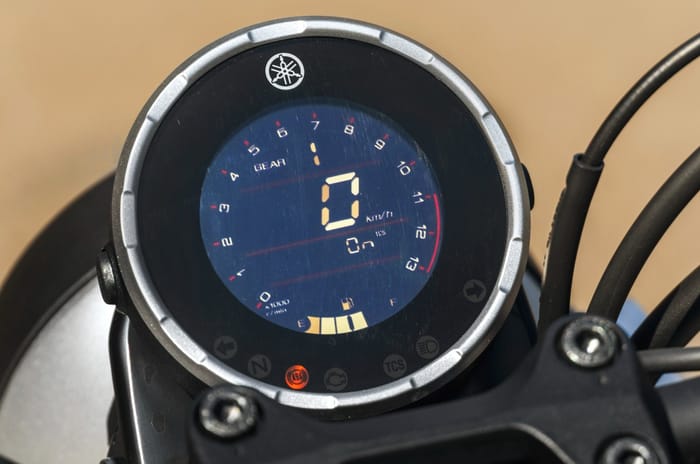
Handsome, round colour LCD display suits the XSR but is a little difficult to read in direct sunlight.
The braking set up is also the same as the other 155cc models and it continues to offer a lack of initial bite that is followed by strong performance once you build some pressure on the lever. The dual channel ABS system is not switchable, but you can deactivate the traction control.
Yamaha XSR155 mileage, engine and performance – 10/10
A tried, tested and much loved motor that is exceptionally fuel efficient
The liquid-cooled 155cc 4-valve SOHC engine makes the same 18.4hp and 14.2Nm as its siblings and it has all the same strong points. These include a smooth, rev-happy feel that is balanced by a tractable nature at lower speeds.
| Engine and output | |
|---|---|
| Engine | 155cc, single-cylinder, liquid-cooled |
| Power | 18.4hp at 10,000rpm |
| Torque | 14.2Nm at 7,500rpm |
| Gearbox | 6-speed |
The motor doesn’t mind holding higher gears in lower speeds, which makes it a treat in the city, but it also rewards you when revved out.
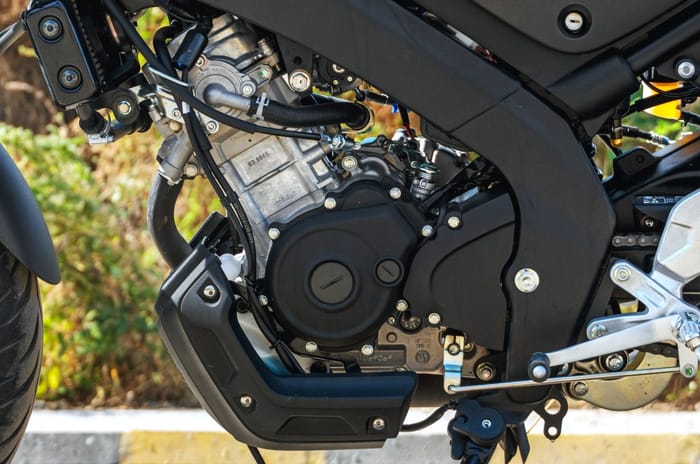
The R15-derived engine is equal parts entertaining and fuel efficient.
The variable valve actuation system kicks in at about 7000rpm and the engine pulls energetically to above 10,000rpm with the rev limiter kicking in at around the 11,000rpm mark. 0-100kph takes just 11.66s which makes it quicker than not only every rival in this cc category but even bigger rivals like the RE Hunter 350 and TVS Ronin.
| Tested performance | |
|---|---|
| 0-60kph (acceleration) | 4.29s |
| 0-100kph (acceleration) | 11.66s |
| 20-50kph (roll-on acceleration) | 3.00s |
| 30-70kph (roll-on acceleration) | 5.73s |
| 50-80kph (roll-on acceleration) | 5.70s |
| 60-0kph (braking, in metres) | 16.27m |
The XSR holds 100kph in 6th gear at around 7,000rpm and it feels quite relaxed at this pace. There is performance in store, but it runs out of steam at around 125kph, although crouching down will show you a top speed of over 130kph.
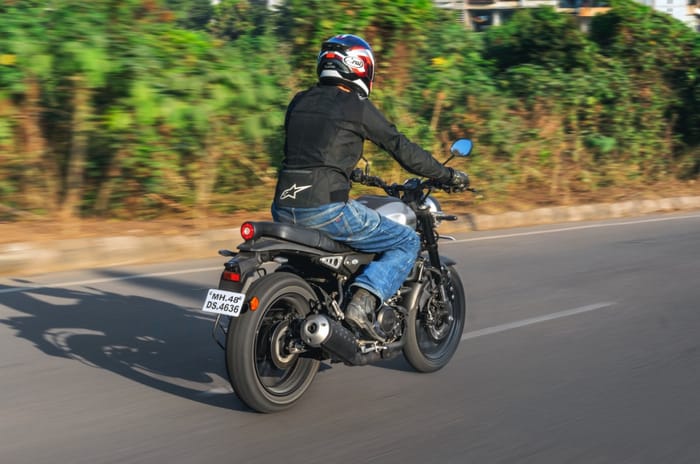
The XSR is quicker than larger rivals, aided by its petite 137kg kerb weight.
Performance is just one side of the coin when it comes to why this motor is so revered in India. The other, almost equal appeal is in how fuel efficient it can be and the bike returned a little over 50kpl in our tests. We test fuel efficiency at very gentle speeds, keeping with the general flow of traffic in the city and holding 75-80kph on the highway, so these figures are a reference of what the bike is capable of returning. More aggressive riding will result in lower figures.
| Tested fuel economy | |
|---|---|
| City | 50.3kpl |
| Highway | 51.7kpl |
| Average | 51kpl |
Yamaha XSR155 price and verdict – 9/10
Well specced and good value for money
The XSR gets a round, colour LCD display with Bluetooth connectivity. It misses out on a TFT display or the quickshifter that you can get in the R15 V4, but it is also priced lower to justify that.
| Price | |
|---|---|
| Price (ex-showroom, Delhi) | Rs 1.50 lakh (introductory) |
At an introductory price of Rs 1.50 lakh, this is not only the most affordable 155cc Yamaha bike, but it also undercuts nearly all variants of the Royal Enfield Hunter 350.
The XSR is a well-rounded product – if only we got it sooner!
With its combination of handsome style, decent comfort, enjoyable performance and great fuel efficiency, this bike has all the makings of being another winner for Yamaha. If only they brought it to our market sooner!